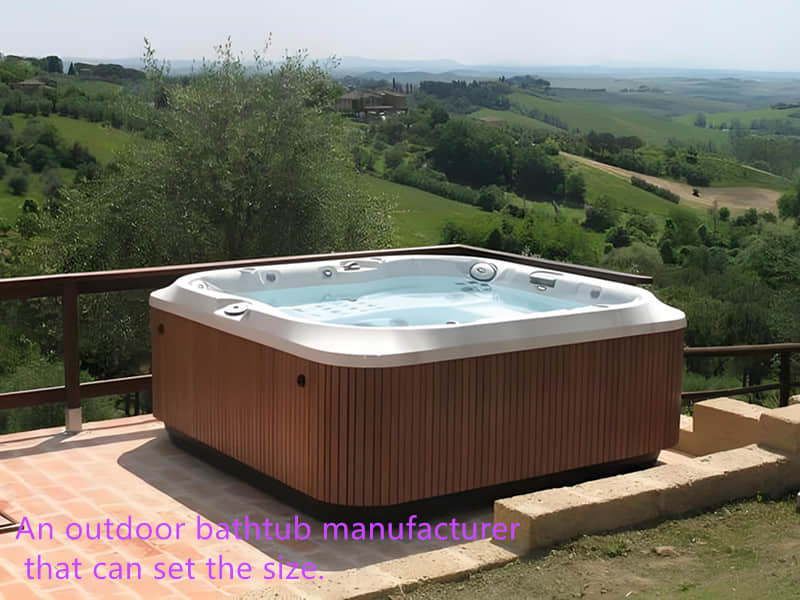
An outdoor bathtub manufacturer that can set the size.
今天来聊聊中国中医理念对冷水浴和热水浴的理解。中国古代医学《千金方》中关于热水浴相关内容的原文记载:“养性·居处法第三”。原文为:“凡居家不欲数沐浴,若沐浴必须密室,不得大热,亦不得大冷,皆生百病,冬浴不必汗出,霡霂。沐浴后不得触风冷。新沐发讫,勿当风,勿湿萦髻,勿湿头卧,使人头风眩闷、发秃面黑、齿痛耳聋、头生白屑。饥忌浴,饱忌沐,沐讫须进少许食饮乃出。夜沐发不食即卧,令人心虚,饶汗多梦。又夫妻不用同日沐浴。常以晦日浴,朔日沐吉。”
这里大致意思是,居家时不宜频繁沐浴,沐浴需在密室进行,水温不能过热或过冷,否则会引发各种疾病,冬季沐浴不一定要出汗。沐浴后不能吹风受凉,刚洗完头发不要迎风,不要湿发挽髻或湿头睡觉,以免引发头风等问题。饥饿时忌沐浴,饱食后忌洗头,洗头后要吃点东西再外出。晚上洗头后不进食就睡觉,会让人心虚、多汗、多梦。夫妻也不要在同一天沐浴,每月的最后一天沐浴、初一洗头比较吉利。
另外,虽没有直接提到泡冷水澡,但有“时行病新汗解,勿冷水洗浴,损心包不能复”的记载,意思是患流行病刚出汗痊愈,不要用冷水洗澡,否则会损伤心包且难以恢复。
翻译成英文,意思如下:Translated into English:
It is not advisable to take a bath too frequently when staying at home. When taking a bath, it is necessary to do it in a closed room. The water temperature should neither be too hot nor too cold, as either situation may give rise to various diseases. In winter, there is no need to sweat when taking a bath. After bathing, one should not be exposed to the wind and cold. After washing the hair, do not face the wind, and do not tie up the wet hair or lie down with wet hair, as it may cause headache, dizziness, hair loss, darkening of the face, toothache, deafness, and the appearance of dandruff on the head. One should not take a bath when hungry, and should not wash the hair when full. After washing the hair, one should consume a little food and drink before going out. If one washes the hair at night and goes to bed without eating, it may make one feel weak in the heart, prone to sweating and having many dreams. Also, husband and wife should not take a bath on the same day. It is auspicious to take a bath on the last day of each month and wash the hair on the first day of the lunar month.
As for the record "When one has just recovered from an epidemic disease and sweated, do not take a cold bath, which will damage the pericardium and make recovery difficult", it means that when one has just recovered from an epidemic disease and sweated, do not take a cold bath, otherwise it will damage the pericardium and it will be difficult to recover.


 English
 Русский