
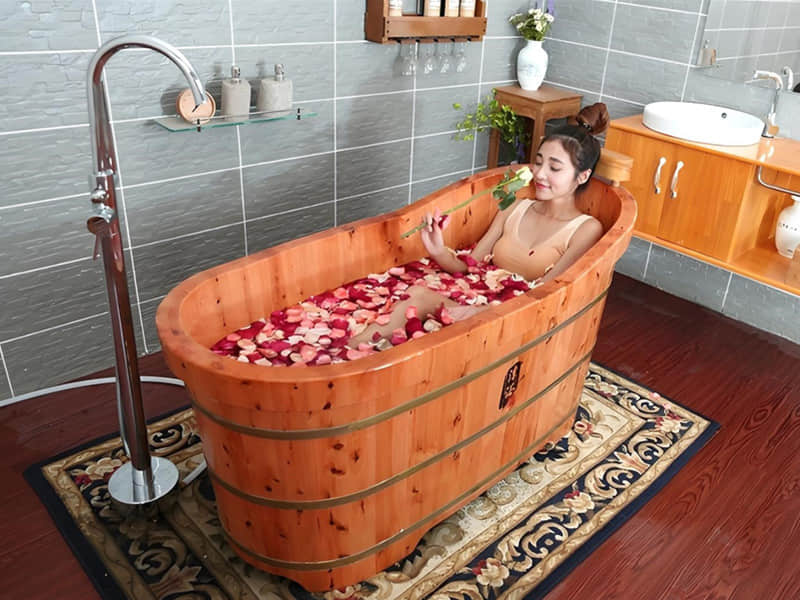
Here are the characteristics of Japanese outdoor hot bath tubs
Natural Materials
Most are made from natural woods like hinoki cypress. This wood offers excellent heat retention, keeping water warm for longer, while also emitting a natural fragrance that promotes physical and mental relaxation.
Minimalist Design
Following traditional Japanese minimalist aesthetics, they feature simple and elegant shapes, emphasizing harmony with the natural environment. The smooth lines of the tubs have no excessive decorations, blending seamlessly into outdoor landscapes.
Attention to Detail
Craftsmanship is highly meticulous, with a focus on detail. The edges of the tubs are typically rounded to prevent skin scratches, and the interior design follows ergonomic principles, ensuring comfort during soaking.
Complete Supporting Facilities
They are generally equipped with corresponding heating devices, such as traditional wood-burning stoves or modern gas/electric heating systems, allowing users to adjust water temperature as needed. Additionally,配套小物件 (supporting accessories) like wooden bath stools and small trays for toiletries may also be included.
Rich Cultural Connotations
Japanese outdoor hot bath tubs carry profound cultural meanings of bathing. They are not just a way to cleanse the body but also an experience to relax the mind and enjoy life. While soaking, people can appreciate outdoor scenery and feel the beauty of nature, making them a carrier for inheriting and promoting traditional Japanese culture.


 English
 Русский